
Lexington County Traffic Venues
The first practical step is reading the court name on the citation. Lexington County traffic cases can route to Central Traffic Court and DUI Court, a local magistrate court, a municipal court, or General Sessions for serious criminal traffic. A ticket issued inside the Town of Lexington may be handled by Town of Lexington Municipal Court, while a county traffic or DUI matter may be heard at the Old Lexington County Courthouse. Some municipal records may appear in Public Index, but official research warns users not to assume every city citation is there.
| Court | Traffic Cases Handled | Address / Phone |
|---|---|---|
| Central Traffic Court & DUI Court | County traffic and DUI matters in the magistrate system | 139 East Main Street, Suite A, Lexington, SC 29072; 803-785-2142 |
| Town of Lexington Municipal Court | Town traffic, municipal, and ordinance matters | 111 Maiden Lane, Lexington, SC 29072; 803-951-4634 or 803-359-6260 in Judicial Branch listing |
| Other municipal courts | Cayce, Chapin, Gaston, Irmo, Pelion, Pine Ridge, South Congaree, Springdale, Swansea, West Columbia, Batesburg-Leesville | Use the municipal court listed on the ticket |
| General Sessions | Serious DUI or criminal traffic cases depending on charge level | Lexington County Judicial Center, 205 East Main Street |
The Town of Lexington Municipal Court page is one official municipal traffic source.
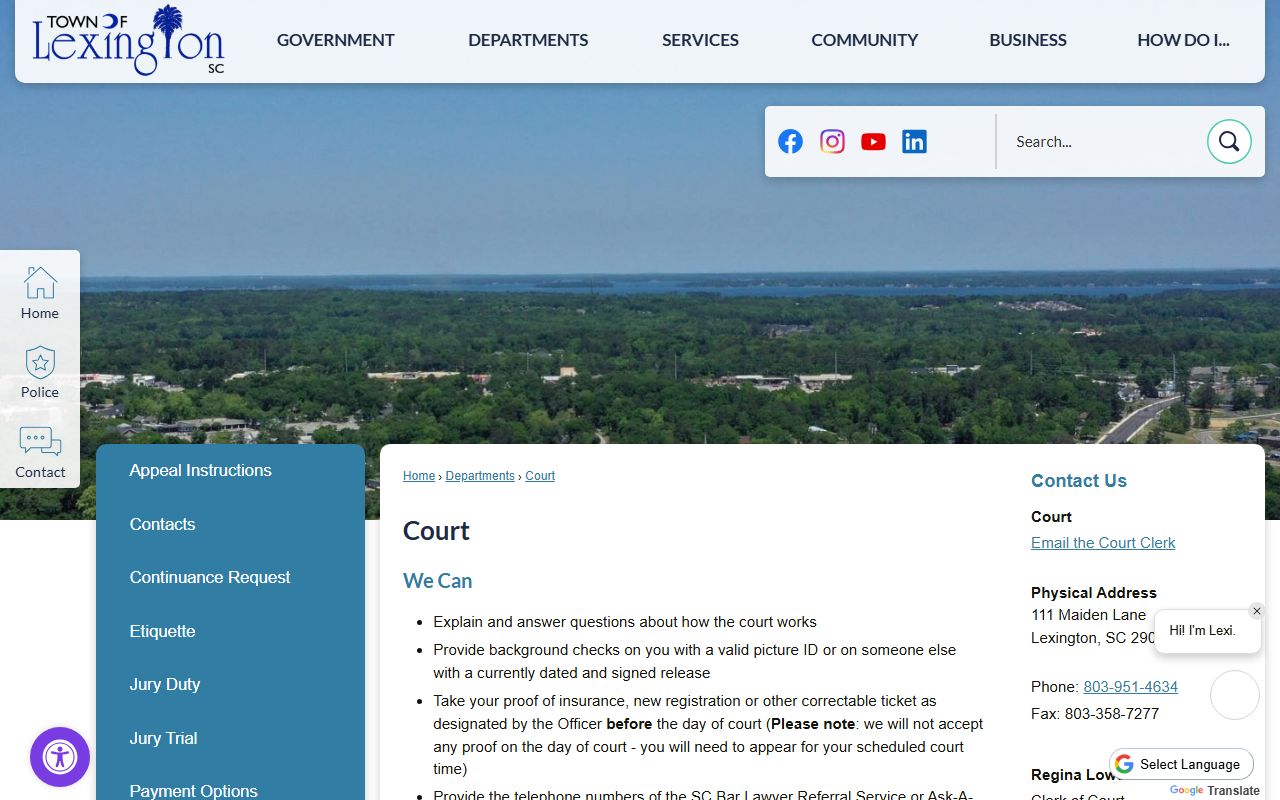
Municipal court contact information is especially important when a citation is not found in a statewide or county search.
Search Lexington County Traffic Court Records
Lexington County online services route traffic ticket payment to the South Carolina Public Index. The Public Index is also the main trial-court case search for Common Pleas, General Sessions, and many Magistrate Court records. For traffic cases, use it when the court participates, then fall back to the court named on the ticket if the citation is missing, too new, municipal-only, or not available through the Public Index.
- Identify the court printed on the citation: Magistrate, Municipal, Central Traffic/DUI, or General Sessions.
- Search the Public Index or traffic ticket payment path if that court participates.
- Use citation number first when known because it avoids name ambiguity.
- Contact the court listed on the citation if the ticket is not found online.
- Pay only through the court's approved process or contest by following that court's plea and hearing rules.
- Check SCDMV separately for license points, suspension, or driver-record consequences.
The state Municipal Court overview explains that municipal courts handle ordinance and limited criminal matters within city limits.
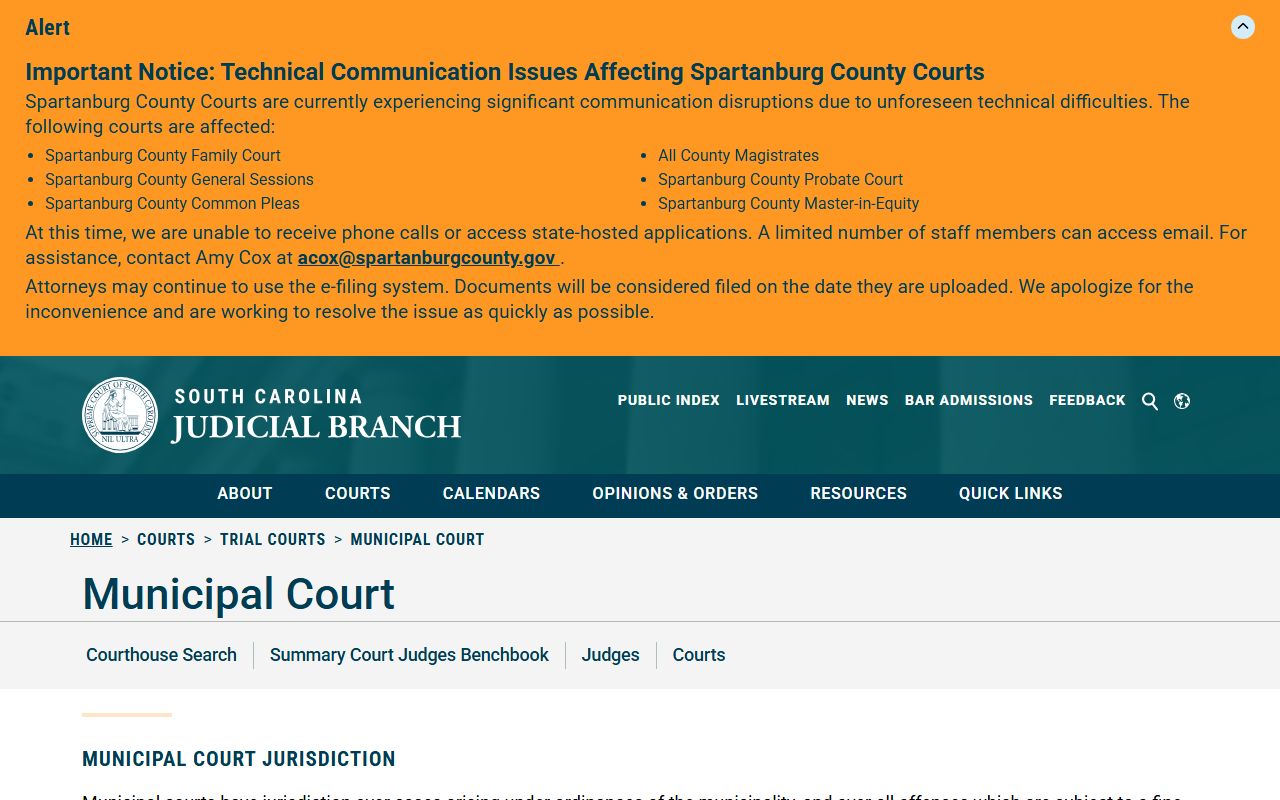
That state-level limit explains why the issuing city court can matter as much as the county search path.
Lexington County Traffic Search Fields
No separate Lexington-specific traffic-only search form field inventory was found in official sources. Traffic court records use the Public Index fields when the relevant court participates. Citation number, name, court type, agency, case type, and date filters are the most useful options for traffic searches.
| Field Label | Type | Required | Notes / Format |
|---|---|---|---|
| Case # | Text | Optional | Use if the citation or case number is known. |
| Last Name / Business | Text | Optional | Driver or party name search; business names also go here. |
| First | Text | Optional | Narrows common last names. |
| Court Type | Dropdown | Optional | May help separate Magistrate, General Sessions, or other case groups. |
| Court Agency | Dropdown | Optional | Useful when the citation court is known. |
| Case Type / Sub-Type | Dropdown | Optional | Can narrow traffic or criminal traffic case groups if available. |
| Date Type / Beginning / Ending | Date filters | Optional | Useful when the ticket date or filing date is known. |
| Name Search Option | Radio | Optional | Begins With or Contains can help with spelling uncertainty. |
Lexington County Traffic Record Details
A court traffic record is a case file or case entry. It can show the citation or case number, charge, court date, plea, disposition, fine, costs, failure-to-appear status, judge, and court. It does not replace the SCDMV driver history. If a citation leads to a DUI or higher-level criminal charge, the General Sessions record may contain broader criminal case fields such as indictment, plea, motions, disposition, and sentencing.
| Field | What It Shows |
|---|---|
| Citation or case number | The court identifier used to find or pay the ticket. |
| Charge | The traffic offense, ordinance, DUI charge, or related criminal traffic allegation. |
| Court date | Hearing, trial, bond, or required appearance date if posted. |
| Plea or disposition | How the case or charge was resolved, if resolved. |
| Fine and costs | Amounts assessed by the court, when shown. |
| Failure-to-appear status | Possible missed-court or warrant consequence that must be checked with the court. |
| Judge or court | The court agency or judge associated with the matter. |
Pay or Contest Lexington County Tickets
Payment is not the same thing as record removal. A paid traffic case can still create a court disposition and may be reported to SCDMV. To pay, follow the payment instructions from the court shown on the ticket or from the Public Index ticket payment path. Online payment is not proof that a case has fully updated until the court record reflects the result.
To contest a ticket, contact the court listed on the citation and follow that court's plea, trial, or hearing process. A missed court date or failure to pay can lead to a bench warrant or license consequence, so a person who missed a date should call the court and, if a warrant may have issued, the Sheriff's Warrant Division. For DUI or serious criminal traffic, review the Lexington County criminal court records path as well.
Key point: Paying a citation may close the court matter but can still affect SCDMV driver history.
Traffic Court vs Driver Records
Lexington County traffic court records and SCDMV driver records answer different questions. The court file tells what happened in the citation case. The SCDMV driver record tells how convictions, points, license status, or suspensions affect the driver's state history. A crash or collision report is a third record type and may exist even if no citation was filed.
| Record Type | Source | What It Shows | How to Access |
|---|---|---|---|
| Court traffic record | Magistrate, Municipal, Public Index, or court clerk | Citation/case number, charge, court date, plea/disposition, fine/costs, warrant or failure-to-appear status, judge/court | Public Index if available, otherwise the court listed on the ticket |
| State driver record | SCDMV | License status, convictions posted to driving history, points, suspensions, driver-history information | SCDMV driving record |
| Crash or collision report | SCDMV or investigating agency | Crash report details, not the traffic prosecution file | SCDMV collision reports or agency request |
The SCDMV driving record page is the official route for driver-history information.
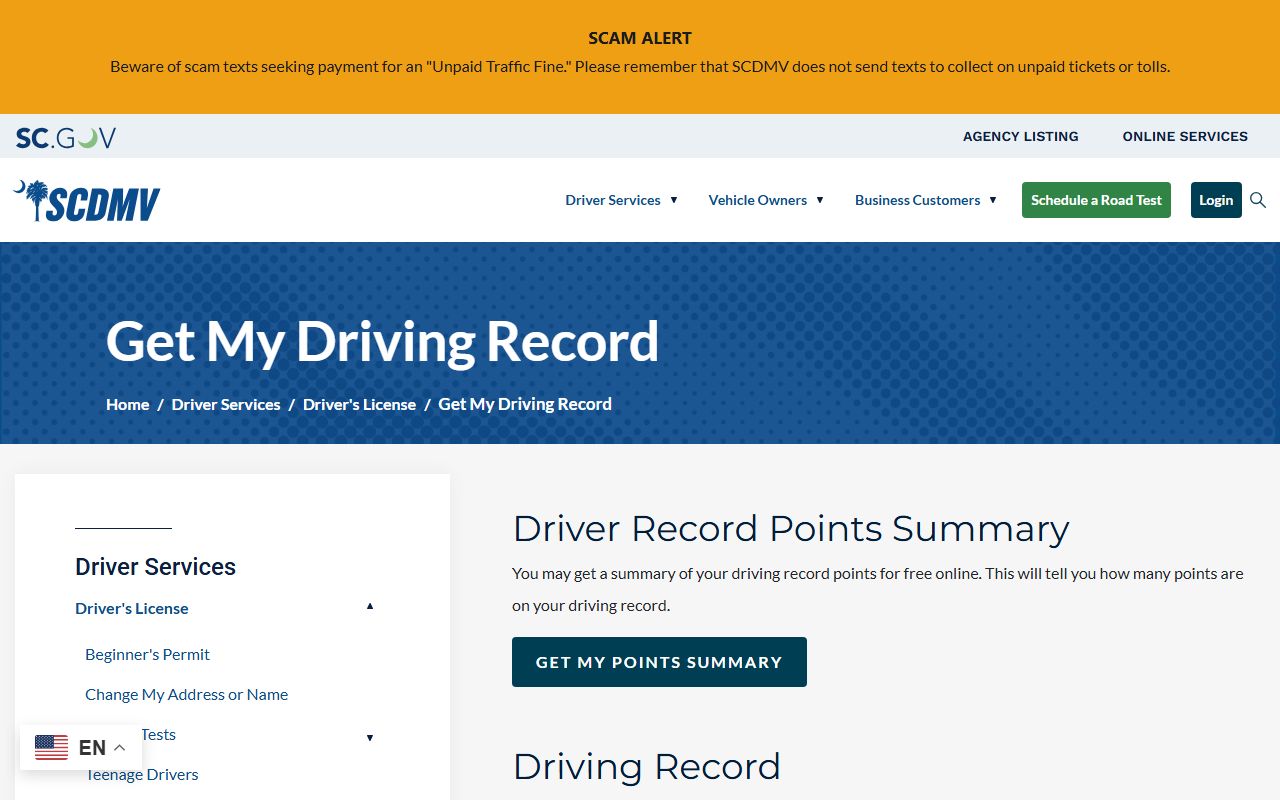
Use it after the court case when the concern is points, suspension, or license status.
Lexington County DUI Records
DUI cases in Lexington County should not be treated as ordinary traffic tickets in every situation. DUI can appear in summary court or General Sessions depending on the charge level and facts. Research found 2024 and 2025 DUI prosecutor grant awards funding assistant solicitor work for DUI-related cases in General Sessions and summary courts in the Eleventh Judicial Circuit, which includes Lexington County.
Local support programs also matter. Traffic Education Program and Alcohol Education Program are listed in Judicial Center Suite 105 with phone 803-785-8197. Eligibility must be confirmed by the court or program; traffic education should not be assumed available for every ticket, CDL case, DUI, or serious offense.
The Town of Lexington court contacts page lists traffic court, bond court, solicitor, public defender, detention, and magistrate contacts.
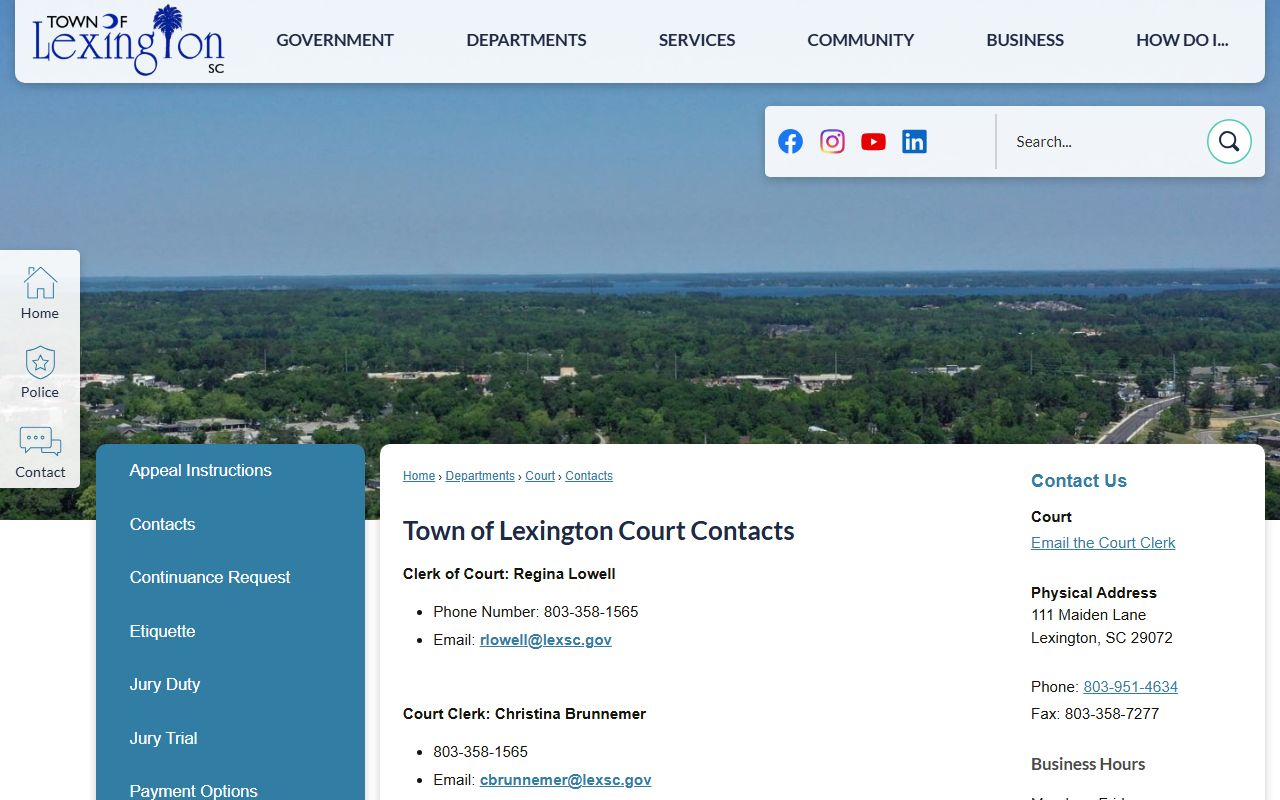
Those contacts help route a traffic, DUI, bond, or prosecution question to the correct office.
CDL, Crash, and Warrant Issues
Commercial drivers should confirm consequences with the court and SCDMV because CDL matters can carry reporting and license effects that differ from a routine ticket. The research did not locate a Lexington-specific CDL deferment rule, so the page should not promise deferral, dismissal, or point avoidance for CDL holders. Serious traffic and DUI matters can also move into criminal-court paths.
- Crash reports are separate from traffic court records and may be requested through SCDMV or the investigating agency.
- Failure to appear or failure to pay can produce a bench warrant or license consequence.
- The court listed on the ticket controls payment and contest steps.
- Public Index may not include every municipal traffic record.
- Driver-record corrections belong with SCDMV, while case-record corrections begin with the court.
The SCDMV collision report page is the official source for crash report access.
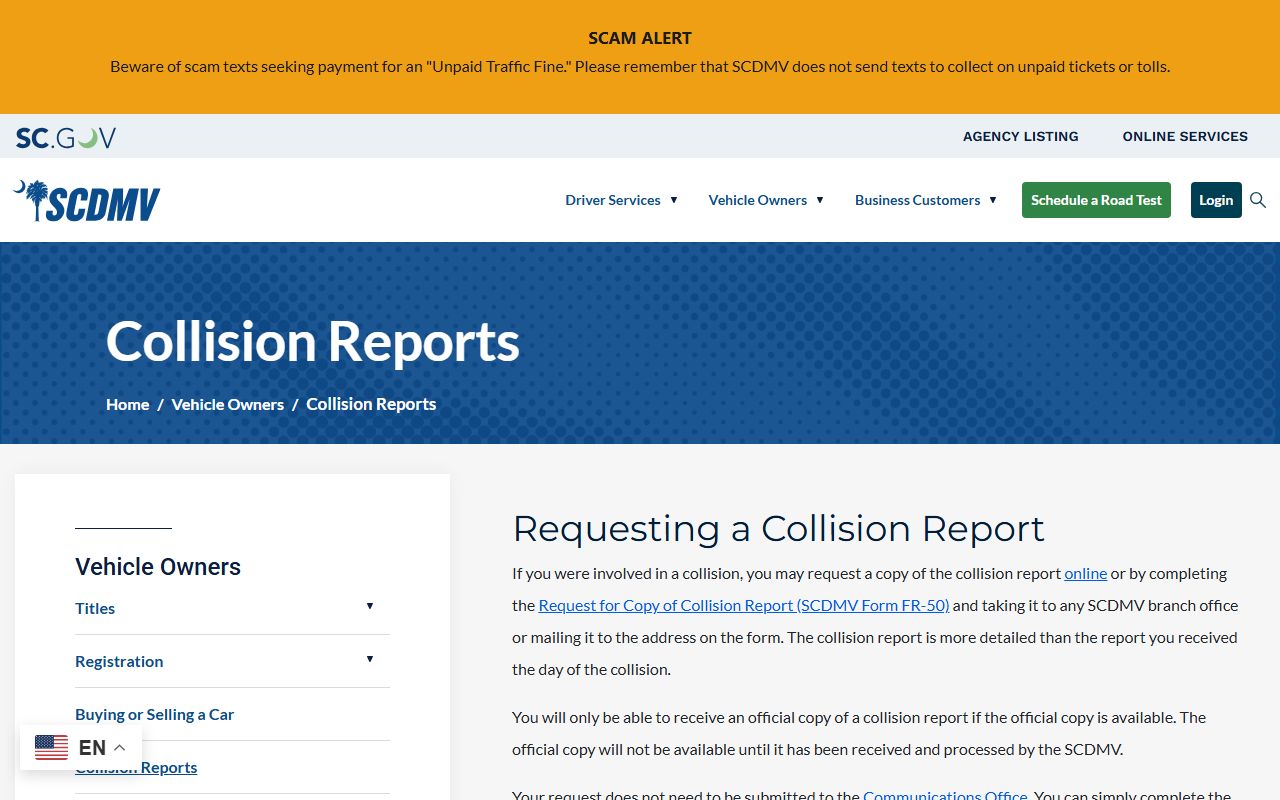
A crash report can support an insurance or incident inquiry, but it is not the court traffic case file.
Lexington County Traffic Access Law
Traffic court records are part of the South Carolina court-record ecosystem. Public access may come through the Public Index, a municipal court, a magistrate office, the Clerk of Court, or a judicial records request when online records do not answer the question. South Carolina FOIA applies to public bodies generally, while judicial records often follow Judicial Branch access rules such as Rule 610. Juvenile, sealed, expunged, and protected personal data can be restricted.
| Authority | Traffic Record Impact |
|---|---|
| S.C. FOIA, Title 30 Chapter 4 | Public bodies must provide access unless an exemption or other law applies. |
| Rule 610 judicial records requests | Judicial records may use court-specific records access rather than ordinary county FOIA. |
| Municipal Court jurisdiction | Municipal courts handle ordinances and limited criminal matters with no civil jurisdiction. |
| Magistrate Court jurisdiction | Magistrates handle county summary matters, bail, preliminary hearings, and warrant roles. |
The municipal court statute is a key source for city traffic venue limits.
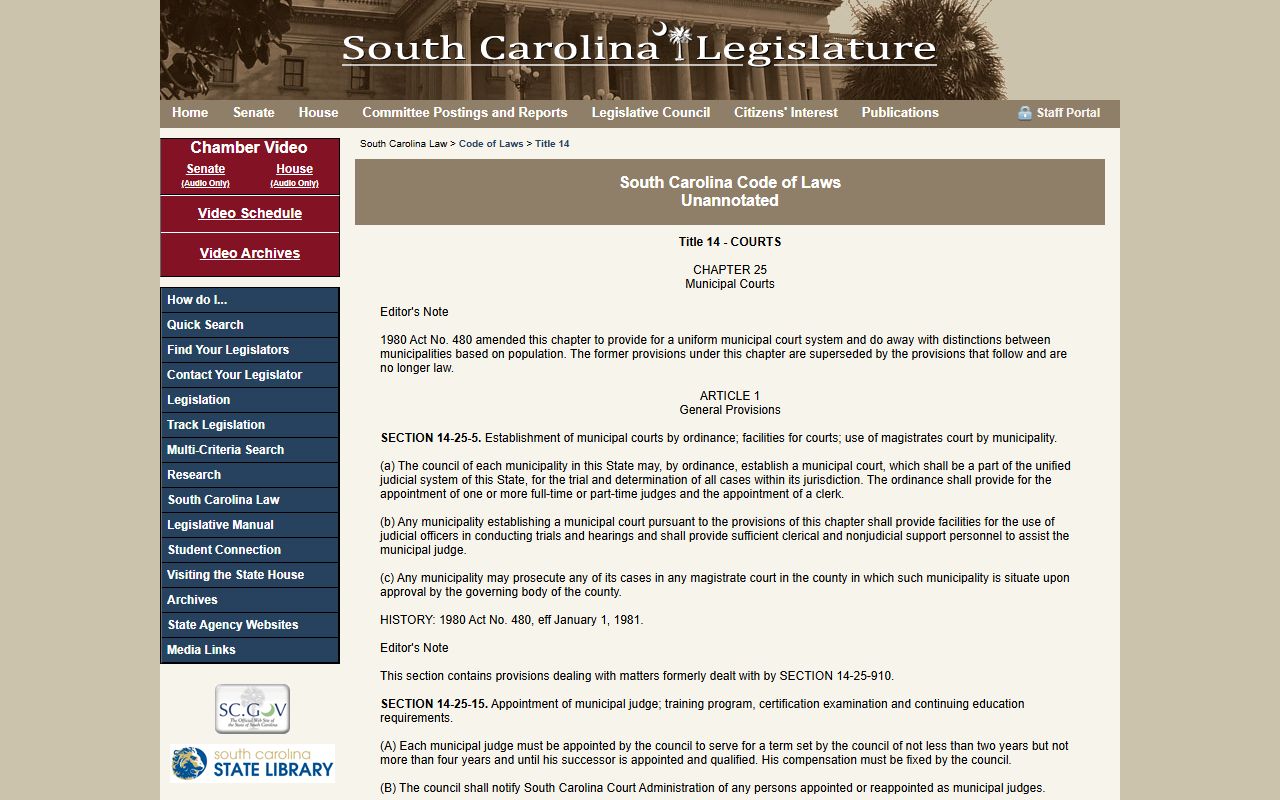
That statute supports checking the specific municipal court when a citation began inside city limits.