
Lexington County Arrest Records and Charges
Lexington County arrest records and court charges are related, but they are not the same record. The arrest record begins with law enforcement, detention, booking, and the primary charge shown by the Sheriff's P2C inmate inquiry when a person is in county custody. The court charge record begins when formal charges move into Magistrate Court, Municipal Court, or General Sessions through the Clerk of Court and Solicitor process.
The official inmate inquiry source is here: Lexington County P2C inmate inquiry.
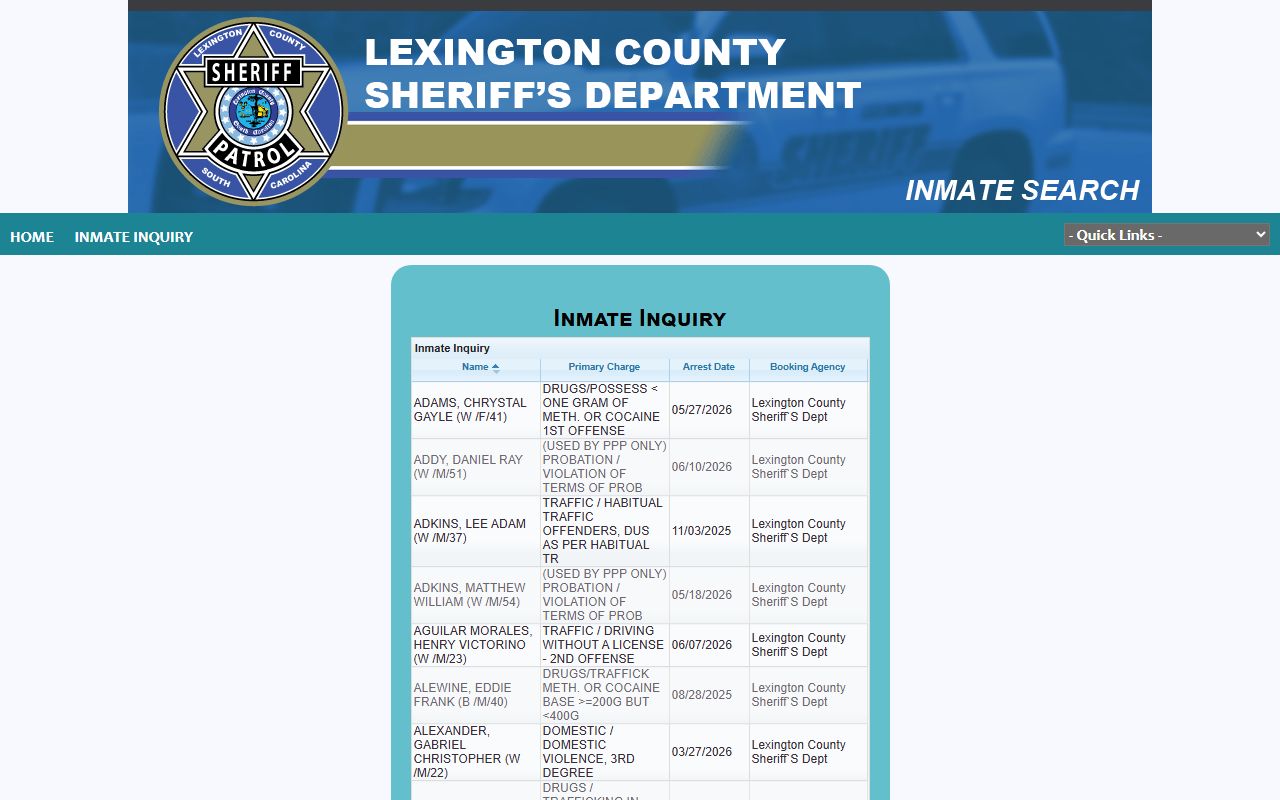
P2C is useful for current custody and booking-charge information, but it is not the same as the full court case record or final disposition.
For the full case file, use Lexington County criminal court records. That file can show pleas, motions, hearings, disposition, sentencing, and later expungement activity.
Find Lexington County Arrest Records
The Sheriff's P2C inmate inquiry is the official county custody search identified in the research. It searches current jail information by last name and first name, and the underlying result model includes fields such as name, primary charge, arrest date, booking agency, age, date of birth, sex, race, and record identifiers. The Sheriff's homepage says inmate search can retrieve booking photographs, but the inspected list view did not expose a stand-alone public mugshot database.
The Sheriff's official source is here: Lexington County Sheriff's Department.
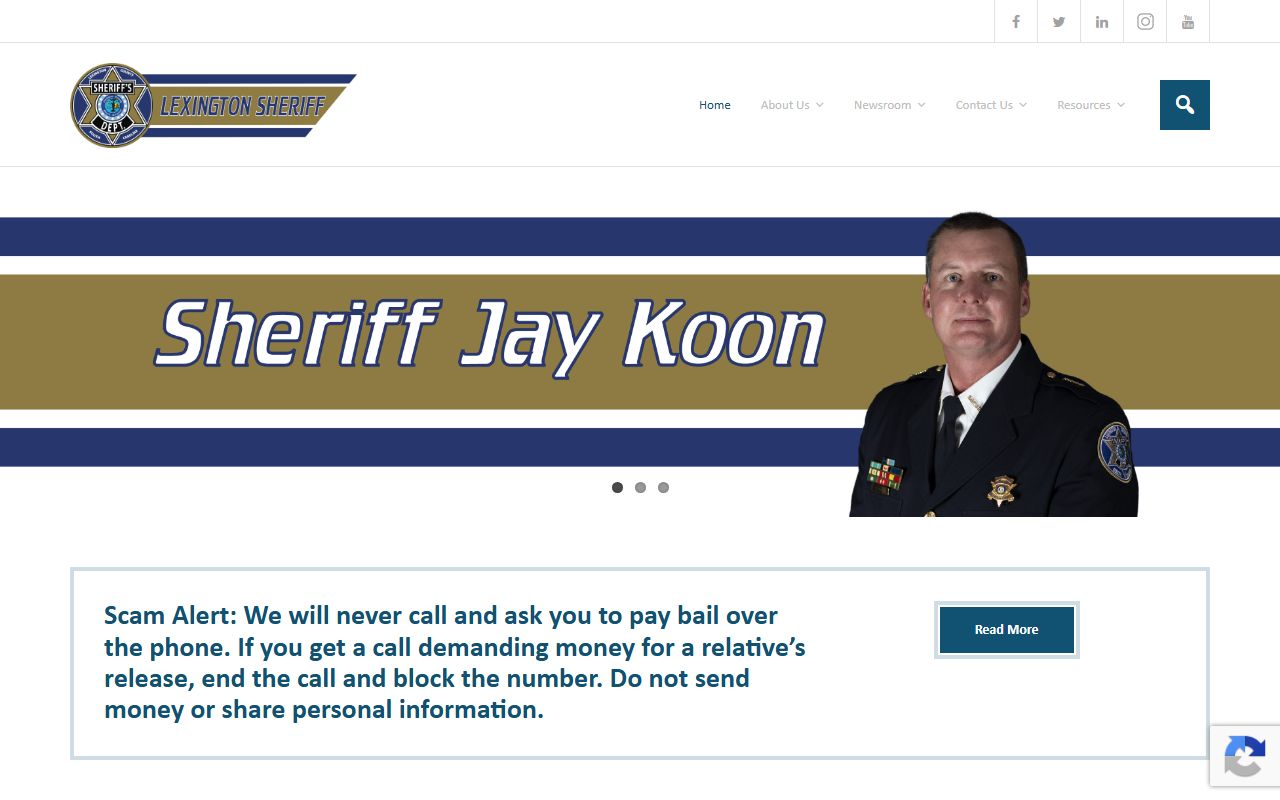
The Sheriff's site also links to inmate search, incident reports, inmate visits, sex offender registry resources, accounts, and public safety notices.
| P2C Field | What It Shows |
|---|---|
| Name | The person listed in the jail system, often with last, first, and middle name. |
| Primary Charge | The main booking charge shown in the jail list. |
| Arrest Date | The arrest date associated with the booking record. |
| Booking Agency | The agency that booked or lodged the person. |
| Demographics | Race, sex, age, and date-of-birth fields in the official model. |
| Booking Identifiers | Record IDs such as book_id, invid, or related internal fields. |
Booking Charge vs Court Case
A booking charge is an early custody label. It can help identify why a person was arrested or held, but it does not prove the final filed charge, the plea, or the outcome. A court case can later show an amended charge, indictment, dismissal, diversion, plea, trial result, or sentence. The Solicitor reviews and prosecutes General Sessions cases for the Eleventh Judicial Circuit, while Magistrate and Municipal Courts handle many lower-level charges and city matters.
| Record | Primary Source | What It Can Show | Main Limit |
|---|---|---|---|
| Arrest or booking record | Sheriff P2C and detention records | Primary charge, arrest date, booking agency, custody data. | Not the final court outcome. |
| Court charge record | Public Index, Clerk, Magistrate, or Municipal Court | Filed charges, indictment, plea, docket activity, disposition. | May lag behind arrest or require local court contact. |
| Full criminal case file | General Sessions or summary court record | Pleas, motions, hearings, sentence, financials, certified copies. | Some documents may be restricted or not online. |
Charges After Arrest Documents
Charges after arrest can enter the court file through different documents. In South Carolina practice, the route depends on court level and offense type. Lower-level matters may begin with a complaint, ticket, warrant, or summary-court document. General Sessions matters may involve an indictment or other formal prosecution step. The Public Index can include indictment number as a search field, which is useful in more serious criminal cases.
| Document | Who Uses It | Why It Matters |
|---|---|---|
| Complaint or warrant | Officer, magistrate, or prosecutor path | Starts or supports a lower-level criminal accusation. |
| Information or formal filing | Prosecutor path when applicable | States the charge the prosecution will pursue. |
| Indictment | General Sessions criminal process | Formal criminal charging reference for serious cases. |
The Solicitor's General Sessions page describes first appearance and resolution options after a case enters the prosecution path: Solicitor General Sessions.
Lexington County Charge Status
Charge status can change as facts, evidence, plea talks, or diversion review develop. The first listed charge in P2C may not match the final filed charge in court. A prosecutor can pursue the original charge, amend it, reduce it, dismiss it, or enter a nolle prosequi. Successful Pre-Trial Intervention can produce a noncriminal disposition, while program violations can return the charge to court.
| Status | What It Means |
|---|---|
| Pending | The charge is active and has not reached final disposition. |
| Amended | The filed charge changed from the original accusation. |
| Reduced | The charge was lowered to a lesser offense or different severity. |
| Dismissed | The charge was ended by court action, with eligibility effects depending on law. |
| Nolle Prosequi | The prosecution declined to continue that charge. |
| Diversion | The charge may resolve through PTI, treatment court, or another approved program. |
Note: A booking charge should be checked against the court case before treating it as the final filed charge.
Detention Bureau Charge Context
The Detention Bureau source helps explain the custody side of arrest records. Lexington County identifies Major Robert Singleton as Detention Bureau Commander, lists detention phone 803-785-2700, and provides visitation, mail, money, medical, bond court, and telephone information. Research notes a capacity distinction: the Sheriff's general description refers to a 720-bed detention center, while the 2024 annual report gives SCDC rated capacity 599, optimal maximum occupancy 420, and 2024 average daily population 641.
The Detention Bureau source is here: Lexington County Detention Bureau.
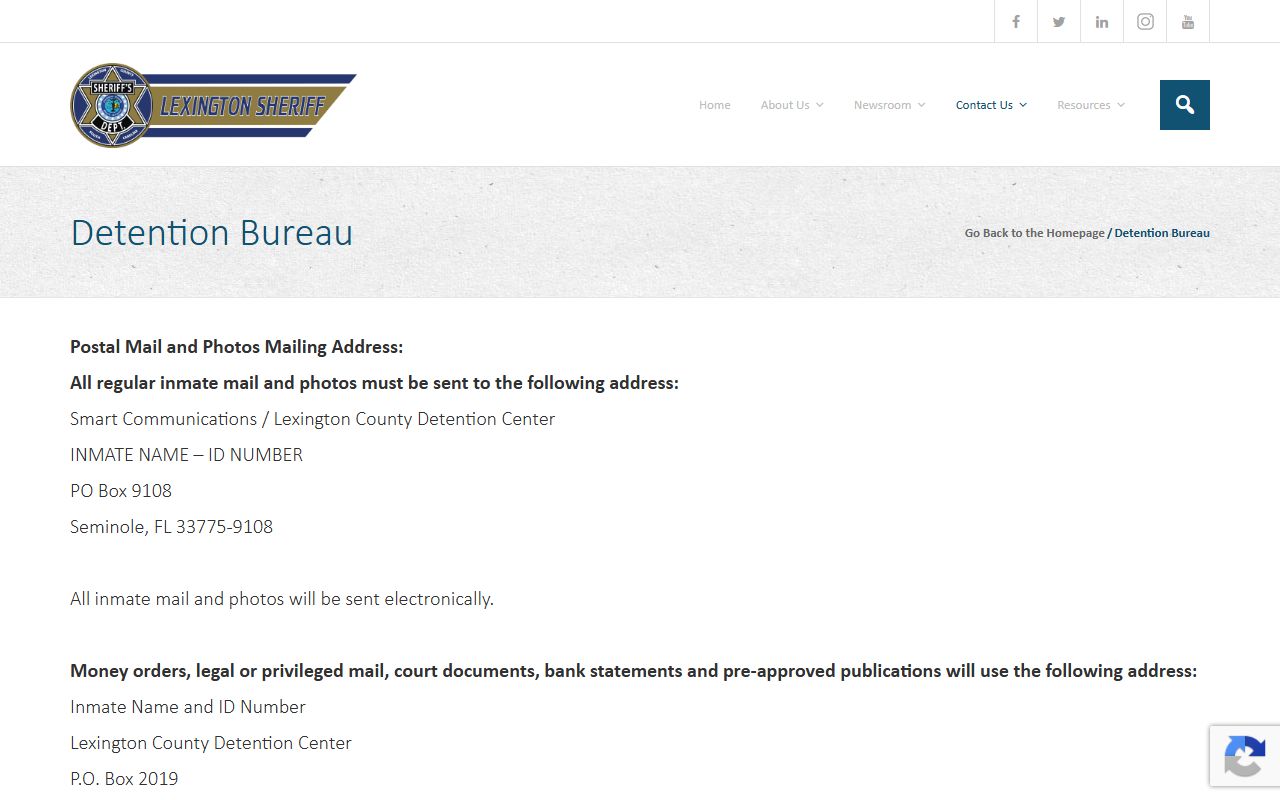
Detention information helps identify custody, bond, and booking context, while the court file is still needed for prosecution outcome.
Lexington County Sheriff's Department
521 Gibson Road
Lexington, SC 29072
803-785-8230
Inmate Information Center: option 2
Lexington County Detention Bureau
521 Gibson Road
Lexington, SC 29072
803-785-2700
Visitation phone: 803-785-2744
County Arrest vs State Prison Search
Lexington County P2C is for county custody and booking information. It is not the South Carolina prison search. The South Carolina Department of Corrections inmate search covers current inmates sentenced to and incarcerated in SCDC as of midnight the previous day. It excludes released offenders, county detention sentences, probation, parole, community supervision, juvenile offenders housed by SCDC, and current SCDC fugitives.
The SCDC scope disclaimer is here: SCDC inmate search disclaimer.

The disclaimer is important because a person may move from county arrest status to state custody only after conviction and sentencing.
The SCDC public search portal is here: SCDC public inmate search.
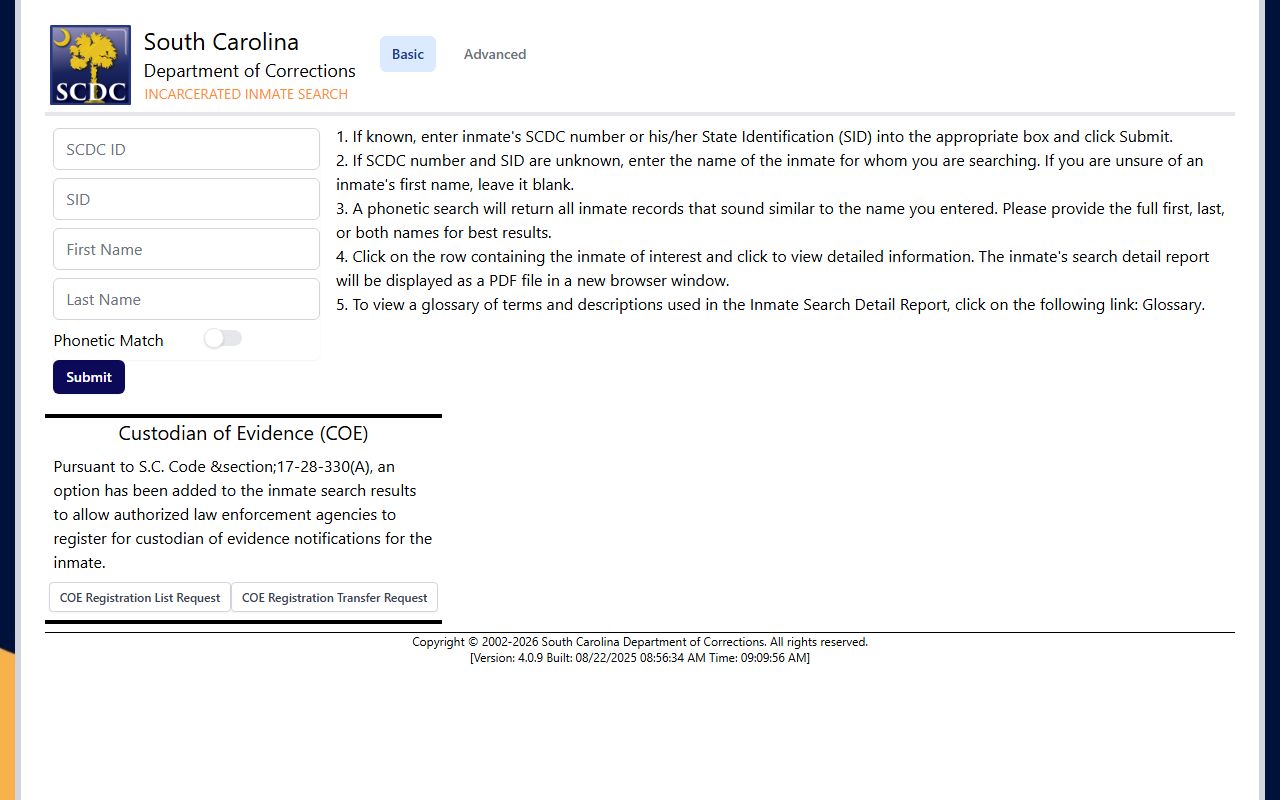
SCDC search fields can include SCDC ID, SID, first name, last name, and phonetic match for state prison custody.
Charges After Arrest vs Convictions
A charge after arrest is an accusation. A conviction is a final finding or plea of guilt. Lexington County court charge records may list charges that were later dismissed, reduced, diverted, or resolved without a conviction. Public Index and court dockets should be read through the disposition and sentence fields, not just the first charge line.
| Charge | Conviction | |
|---|---|---|
| Stage | Before final case outcome. | After guilty plea, verdict, or qualifying judgment. |
| Proof | Accusation or probable-cause stage. | Final criminal responsibility established in court. |
| Record clue | Booking charge, indictment, complaint, or filed count. | Disposition and sentencing entry. |
| Can change | Yes, it may be amended, reduced, dropped, or dismissed. | May be appealed, corrected, or expunged if eligible. |
Restricted Arrest and Charge Records
Some arrest and charge records are not open in full. Juvenile records are confidential under South Carolina law. Sealed and expunged matters are removed from ordinary public access when a statute or court order applies. Family Court bench warrants, protection-order material, child-related records, and mental health proceedings can also carry access limits. Public Index also suppresses public home address information as of January 1, 2026.
| Sealed | Expunged | |
|---|---|---|
| Public access | Hidden from routine public view. | Removed or destroyed under the order's terms. |
| Who handles it | Court order or statutory process. | Eleventh Circuit Solicitor for eligible Lexington County offenses. |
| Common reason | Confidentiality, juvenile status, or court protection. | Eligible dismissed, not-guilty, discharged, or diversion-related outcome. |
Use the Solicitor expungement FAQ for eligibility and application routing in the Eleventh Circuit. For judicial records not available online, Rule 610 requests may apply. For county administrative records, South Carolina FOIA is the separate public-record law.